
How to Plan and Execute Successful Warehouse Projects
AB
Warehouse projects are becoming more complex as businesses face growing customer expectations, increasing inventory volumes, and higher demands for speed and accuracy. Whether a company is building a new warehouse, expanding an existing facility, implementing warehouse management software, redesigning storage layouts, or introducing automation, every project requires careful planning and disciplined execution.
A successful warehouse project is not simply about completing construction or installing equipment; it is about creating an operation that improves productivity, supports future growth, and delivers long-term value.
As businesses move through 2026, warehouse operations are evolving faster than ever. E-commerce continues to influence fulfillment strategies; supply chains remain dynamic, and companies are investing in smarter technologies to remain competitive.
Organizations that approach warehouse projects with a clear strategy are more likely to reduce operational disruptions, improve inventory accuracy, and achieve a stronger return on investment.
Why Warehouse Projects Matter More Than Ever
Warehouses have become strategic business assets rather than simple storage facilities. They directly influence customer satisfaction, inventory management, transportation efficiency, and operating costs. Poorly planned warehouse projects often result in workflow bottlenecks, higher labor expenses, inaccurate inventory records, and costly redesigns.

A successful warehouse project aligns operational goals with business objectives. Instead of focusing solely on physical space, companies should consider how the warehouse will support order fulfillment, inventory visibility, workforce productivity, and future expansion.
In 2026, many organizations are investing in warehouse modernization to improve resilience against supply chain disruptions while meeting growing customer expectations for faster delivery and greater order accuracy.
Begin with Clear Business Objectives
Every warehouse project should start by identifying specific business goals. These objectives guide every decision throughout the planning and execution process.
Some organizations may need additional storage capacity because of growing sales. Others may want to reduce order processing time, improve inventory accuracy, lower operating expenses, or prepare automation.
Without clearly defined goals, project teams often struggle with changing priorities, unexpected costs, and unrealistic expectations.
Business objectives should answer questions such as:
What operational problems need to be solved?
- How will success be measured?
- What improvements are expected after project completion?
- How will the project support long-term company growth?
Establishing measurable goals allows management to evaluate project performance after implementation.
Evaluate Current Warehouse Operations
Before designing innovative solutions, companies must understand their existing operations. A comprehensive warehouse assessment identifies strengths, weaknesses, and opportunities for improvement.
This evaluation should include inventory movement, receiving processes, storage utilization, picking accuracy, shipping workflows, equipment performance, labor productivity, and warehouse safety.
Historical performance data often reveal recurring problems that should be addressed during the project. Common issues include:
- Overstocked inventory occupying valuable space.
- Frequent stockouts.
- Congested traffic aisles.
- Slow receiving operations.
- Inefficient picking routes.
- Excessive manual data entry.
- Poor inventory visibility.
Understanding these challenges helps organizations avoid repeating the same operational problems in a newly designed warehouse.

Develop a Realistic Project Plan
A warehouse project requires detailed planning before implementation begins.
The project plan should define the overall scope, timeline, budget, responsibilities, milestones, and expected deliverables. Every department affected by the warehouse, including operations, logistics, purchasing, finance, IT, and customer service, should participate in the planning process.
Successful project plans also identify potential risks and include contingency strategies to minimize disruptions.
Planning reduces uncertainty and helps ensure that project decisions remain aligned with organizational goals throughout implementation.
Design an Efficient Warehouse Layout
Warehouse layouts have a significant impact on productivity.
A well-designed facility minimizes unnecessary travel while supporting smooth inventory flow from receiving through shipping. Every square foot should contribute to operational efficiency.
Storage systems should accommodate product characteristics, inventory turnover rates, and expected growth. Frequently picked products should be positioned closer to shipping areas to reduce travel time.
Warehouse layouts should also prioritize employee safety by maintaining clear walkways, proper traffic flow, adequate lighting, and sufficient working space around equipment.
As warehouse automation becomes more common in 2026, layouts must also consider future robotics, automated storage systems, and conveyor installations even if they are not part of the initial project.
Invest in the Right Technology
Technology has become one of the most valuable investments in warehouse projects.
Modern Warehouse Management Systems (WMS) provide real-time inventory tracking, automated inventory updates, optimized picking routes, labor monitoring, and performance reporting.
Additional technologies may include:
Barcode scanning improves inventory accuracy while reducing manual errors.
RFID technology provides faster inventory identification and tracking.
Mobile devices allow employees to update inventory information instantly.
Artificial intelligence helps predict inventory demand and optimize storage locations.
Internet of Things (IoT) sensors monitor warehouse conditions, equipment health, and asset movement.
Cloud-based systems allow managers to monitor operations from virtually anywhere while supporting easier software updates.
Choosing scalable technology ensures the warehouse can adapt to future business growth without requiring major system replacements.
Focus on Employee Involvement
Warehouse employees understand daily operations better than anyone else.
Including supervisors and frontline employees during project planning often reveals practical insights that improve warehouse design and workflow efficiency.
Employee feedback may identify:
- Inefficient picking routes.
- Storage accessibility issues.
- Safety concerns.
- Equipment limitations.
- Workflow bottlenecks.
Employee involvement also increases acceptance of operational changes and reduces resistance during implementation.
Providing proper training before launching new systems helps employees become productive more quickly while minimizing operational disruptions.
Manage Budgets Carefully
Warehouse projects represent significant financial investments.
Project budgets should account for construction costs, equipment purchases, software implementation, training, consulting services, contingency funding, and temporary operational expenses during implementation.
Unexpected costs are common in warehouse projects. Maintaining a contingency reserve helps organizations respond to unforeseen challenges without delaying completion.
Regular financial reviews throughout the project allow management to monitor spending and adjust before small issues become major financial problems.
Reduce Operational Disruptions
Many warehouse projects occur while facilities remain operational.
Maintaining customer service during implementation requires careful scheduling and communication.
Project managers often divide implementation into phases to reduce operational interruptions. Certain improvements may be completed during weekends, holidays, or slower business periods.
Temporary storage arrangements, revised workflows, and additional labor may be necessary to maintain productivity while construction or equipment installation takes place.
Careful planning minimizes customer impact while allowing operations to continue successfully.
Monitor Progress Throughout the Project
Regular project monitoring keeps implementation on schedule.
Project managers should continuously evaluate timelines, budgets, milestones, risks, and resource availability.
Frequent meetings allow project teams to identify issues early and make necessary adjustments before delays become costly.
Key performance indicators (KPIs) provide measurable progress throughout implementation. Examples include project completion percentages, budget performance, installation milestones, system testing results, and employee training completion.
Consistent communication keeps everyone aligned and reduces misunderstandings among departments.
Test Before Full Implementation
Testing is one of the most important phases of any warehouse project.
New equipment, warehouse management software, inventory processes, and operational workflows should be thoroughly tested before full deployment.
Pilot testing allows companies to identify software issues, workflow inefficiencies, and equipment problems while minimizing operational risk.
Testing should include receiving, put-away, picking, packing, shipping, inventory counting, reporting, and system integrations.
Resolving issues before full implementation reduces costly disruptions after the warehouse becomes fully operational.
Measure Success After Completion
Warehouse projects should not end when construction or implementation is complete.
Organizations should compare actual performance against the original business objectives.
Performance measurements may include inventory accuracy, labor productivity, order fulfillment speed, shipping accuracy, warehouse utilization, customer satisfaction, operating costs, and employee safety.
Continuous improvement ensures the warehouse delivers value as business needs evolve.
Regular operational reviews also identify opportunities for additional optimization.
Sustainability Is Becoming a Standard
Environmental responsibility is playing an increasingly significant role in warehouse planning.
Many businesses now incorporate sustainable practices into warehouse projects to reduce operating costs while supporting corporate environmental goals.
Examples include LED lighting, energy-efficient HVAC systems, solar energy, electric forklifts, recyclable packaging materials, water conservation initiatives, and smart energy management systems.
Sustainable warehouse design not only reduces environmental impact but can also lower utility expenses and improve operational efficiency over time.
As customers and business partners place greater emphasis on sustainability in 2026, environmentally responsible warehouses may gain a competitive advantage.
The Growing Role of Automation in 2026
Automation continues to reshape warehouse operations in 2026.
Rather than replacing employees, automation allows workers to focus on higher-value activities while repetitive tasks become more efficient.

Autonomous mobile robots assist with inventory movement.
Automated storage and retrieval systems improve space utilization.
AI-powered forecasting helps optimize inventory planning.
Vision systems improve quality inspections.
Automated packaging systems accelerate shipping operations.
Companies planning warehouse projects today should design facilities that can accommodate future automation even if immediate implementation is not financially feasible.
Building flexibility into warehouse infrastructure protects long-term investments.
Data-Driven Decision Making
Warehouse projects increasingly rely on operational data to improve decision-making.
Advanced analytics provide valuable insights into inventory trends, labor productivity, equipment performance, order volumes, and customer demand.
Rather than relying on assumptions, managers can make informed decisions supported by accurate data.
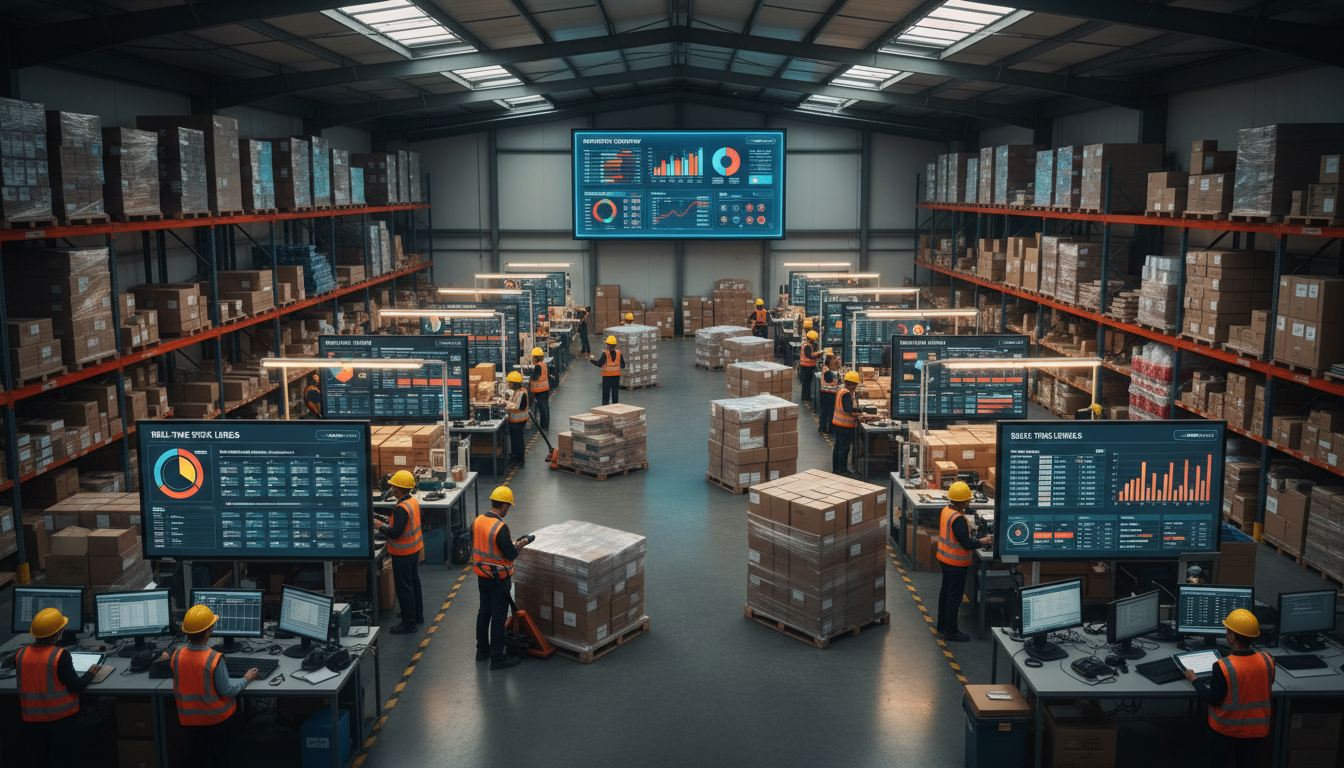
Real-time dashboards allow leadership teams to identify operational issues quickly and respond before they affect customers.
Data-driven management improves planning accuracy while supporting continuous warehouse optimization.
Common Reasons Warehouse Projects Fail
Although warehouse projects offer tremendous opportunities, several common mistakes can limit success.
Poor planning often leads to unrealistic expectations and budget overruns. Inadequate employee involvement can create resistance to new processes, while selecting technology without considering future growth may require expensive upgrades later.
Many organizations also underestimate the importance of employee training, resulting in slower adoption and reduced productivity. Failing to monitor project progress regularly can allow small problems to grow into significant delays.
By recognizing these challenges early, businesses can take proactive steps to reduce risk and improve project outcomes.
The Impact of Successful Warehouse Projects on Warehousing Businesses in 2026
Warehouse projects completed successfully can significantly strengthen a company's competitive position in 2026.
Businesses benefit from faster order fulfillment, improved inventory visibility, higher labor productivity, and better customer satisfaction.
Modern warehouse technologies also support more accurate forecasting, enabling companies to respond quickly to changing market demands while reducing excess inventory.
As labor shortages continue to challenge the logistics industry, efficient warehouse designs and automation help businesses maximize workforce productivity without compromising service quality.
Scalable facilities also provide the flexibility needed to support business expansion, new product lines, and evolving customer expectations.
In addition, data-driven warehouse operations improve decision-making by providing managers with real-time performance insights.
Companies can identify inefficiencies more quickly, optimize resource allocation, and make continuous improvements that reduce operating costs over time.
Organizations that invest in strategic warehouse planning today will be better prepared to navigate future supply chain challenges, embrace emerging technologies, and remain competitive in an increasingly fast-paced logistics environment.
Conclusion
Planning and executing a successful warehouse project require far more than completing a construction schedule or installing new equipment. It demands clear objectives, detailed planning, employee involvement, smart technology investments, continuous monitoring, and a commitment to ongoing improvement. As warehousing continues to evolve in 2026, businesses that prioritize strategic project management will be better positioned to improve operational efficiency, reduce costs, and deliver exceptional customer service.
If your organization is preparing for a warehouse expansion, facility redesign, technology upgrade, or operational transformation, AWT Warehouse Services provides the expertise and innovative solutions to help your project succeed. From warehouse optimization to advanced logistics strategies, AWT Warehouse Services is committed to helping businesses build smarter, more efficient warehouses that support long-term growth and operational excellence.